Tempted to skip the stretch? We’ve all been there. Stretching regularly can help you stay limber and even prevent injury. Adding stretches for flexibility into your routine provides multiple benefits.
Flexibility reduces injury risk and muscle aches while increasing your range of motion and blood flow. The problem is that many people skip stretching altogether. Add some simple stretches to your repertoire to increase flexibility and get the most out of your workout.
However, stretching alone can’t completely prevent an injury and some stretches aren’t right for all athletic activities. If you do get hurt or have questions about what stretches are right for you, make an appointment with an orthopedic specialist for a personalized plan.
Stretches for flexibility and movement
Having better flexibility has plenty of benefits. It can:
- Improve your range of motion and physical performance
- Reduce the risk of injuries
- Enhance blood flow to muscles and joints
- Support posture and balance
- Relieve stress and muscle tension
Stretching at least two to three times a week, especially after other physical activity, will have the greatest impact.
Standing forward fold
Standing forward fold is a great stretch to target your lower back and hamstrings. This stretch can be done in a variety of ways based on your needs and available props.
Begin standing shoulder-width apart with your knees slightly bent. Slowly lower your upper body down to the floor. It may feel good to pedal out your knees and shift your hips side-to-side.
Enjoy this stretch for 30 seconds to three minutes. During this time, you have the option to:
- Grab both elbows and pull them down to the floor.
- Place your hands on a waist-high surface, such as a counter. This allows you to pull your hips further back, opening up the lower body even more.
- Interlace your fingers behind your lower back, then lift your hands and arms upward, so they are closer to your head. Breathe deeply and melt any tension out of your shoulders.
Crescent pose
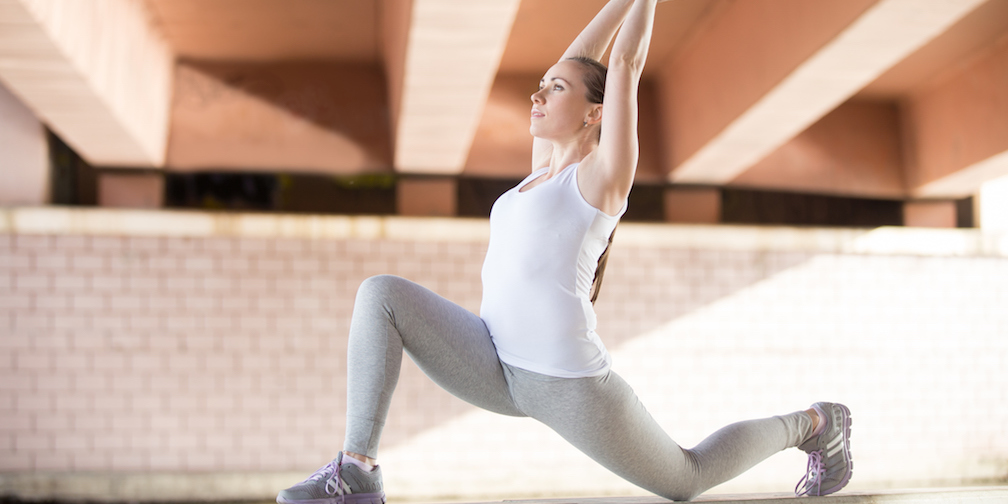
Crescent pose, also called a crescent lunge or anjaneyasana pose, not only increases flexibility, but improves balance and focus. In addition to stretching the hip flexor of the back leg, crescent pose strengthens the front leg.
Here’s how to do it:
- Step one foot forward and one foot back
- Press your front foot flat onto the floor and lift your back heel up to the sky
- As you inhale, engage your core and begin to lift your palms overhead, reaching your fingertips to the ceiling
Take your crescent lunge deeper by shifting more weight into your front foot, squeezing your inner thighs together and lowering your hips closer to the floor.
For any shoulder pain, hold your hands in prayer at your heart’s center. You can also hinge forward to help relieve lower back pain – just make sure your spine stays long and straight. Hold side one for 30 to 60 seconds and then repeat on side two.
Spinal twist
Now that your legs and hips are open, it’s time to increase lateral flexibility. Spinal twist will stretch your spine, neck and shoulders. While it’s OK for your back to crack in this position, be careful not to push yourself too far. Your stretches should focus on increasing flexibility, not adding pain.
Start by sitting up tall with both legs stretched out. Cross your right foot over your body, so it lands on the outside of your left thigh. Place your right hand behind you. As you inhale, use your left arm to hug your right knee closer to your chest.
On your exhale, deepen your upper-body twist to the right. Focus on lengthening your spine as you continue breathe deeply, holding for 30 to 60 seconds. Repeat on side two.
Other stretches for flexibility
Some other quick yet beneficial stretches for flexibility include:
- Hip flexor stretch: Kneel on one knee with the other foot forward. Shift weight forward until you feel a stretch in the front of your hip. Hold for 20 to 30 seconds.
- Butterfly stretch: Sit with the soles of your feet together and knees out. Hold your feet and gently press your knees toward the floor. Hold for 30 seconds.
- Cat-cow stretch: On all fours, alternate arching your back (cow) and rounding it (cat). Repeat five to 10 times.
- Calf stretch: Stand facing a wall, one leg forward bent, other straight behind. Press your heel down. Hold for 20 to 30 seconds.
How we can help
While it’s no secret these stretches improve flexibility, you may also notice additional benefits such as improved energy, increased stamina, better posture and even reduced cholesterol.
If you’re recovering from an injury and have questions about stretching, make an appointment with an orthopedic specialist. They may refer you to a sports medicine specialist or a physical therapist to ensure you receive the best care for your specific condition.
Learn about the orthopedic and sports medicine services we offer at Mercy Health.