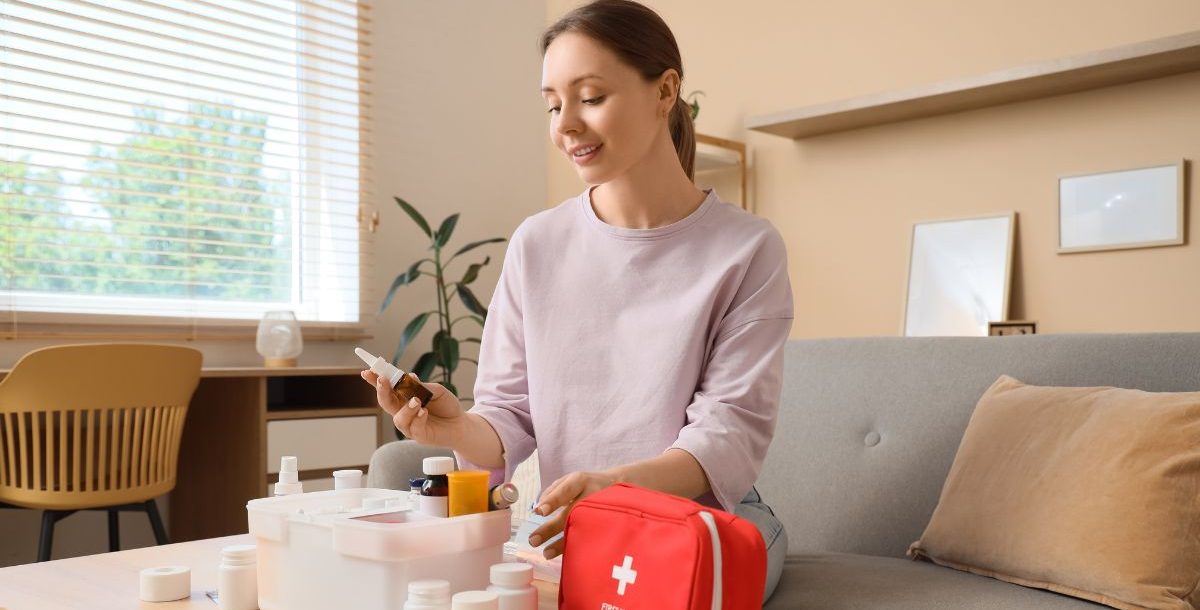
Knowing what to have in a first-aid kit can help you be more prepared when everyday injuries happen. Having the right supplies nearby makes it easier to treat minor injuries such as scraped knees, bug bites or sprains.
A first-aid kit can help you care for a minor wound, reduce discomfort and support someone until medical help is available. However, for serious injuries or other life-threatening symptoms, call 911 immediately.
Keep a first-aid kit at home, in your car and when you’re doing outdoor activities can help you stay prepared. If you have questions about what supplies may be best for your household, reach out to your primary care provider.
What to have in a first-aid kit for your home
Everyone needs first aid periodically, even the most careful individuals. Accidents happen, especially if you have young children. Maintaining a fully stocked first-aid kit at home can help you stay prepared for anything that either doesn’t require medical attention or can be treated while waiting to be seen.
You don’t need to keep everything your local pharmacy sells on hand at home. Some essentials, basic first-aid supplies and anything specific to your household is likely sufficient to care for yourself and your family.
Essentials
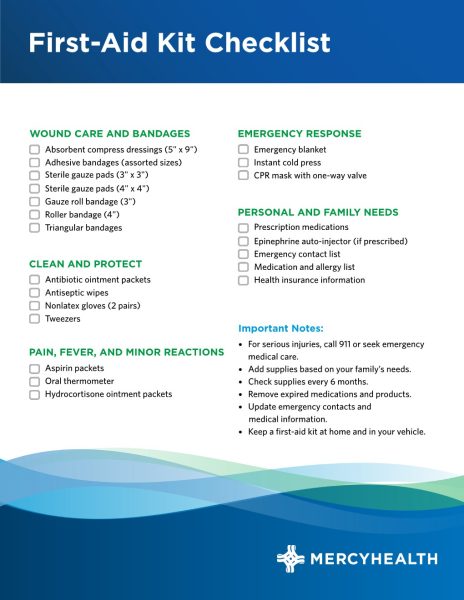
Some of the most important first-aid kit essentials for home include:
- Bandages: Adhesive bandages in different sizes help cover small cuts or scrapes.
- Sterile gauze and medical tape: For larger wounds, sterile gauze pads can provide more coverage than bandages. The adhesive tape keeps the gauze in place.
- Elastic wrap bandages: These can provide gentle support for mild sprains and strains.
These basic supplies are useful for minor concerns around the house.
Wound-cleaning supplies
Cleaning a minor wound is an important first step before covering it. Your first-aid kit checklist should include items that keep the injured area protected.
Helpful wound-cleaning supplies include:
- Antiseptic wipes: These can help clean the skin around a cut or scrape.
- Hand sanitizer: This is useful when soap and water are not nearby.
- Disposable gloves: Gloves help protect both the injured person and the person giving care.
- Tweezers: These can help remove splinters or small debris from the skin.
- Scissors: These can be used to cut gauze, tape or clothing away from an injury when needed.
If a wound is deep or showing signs of infection, such as redness, swelling or drainage, you should seek immediate medical care at the nearest urgent care. However, depending on the seriousness of the injury, you may need to go to the emergency department.
Burns, bites and skin irritation
Insect bites, burns and rashes can often be treated at home with a first-aid kit. As long as these injuries aren’t too serious and you treat them properly, you can avoid a visit to urgent care or the emergency department.
Consider keeping these items in your kit:
- Aloe vera gel or burn cream: These may help soothe discomfort from minor burns. Cool running water can also help right after a minor burn happens.
- Hydrocortisone cream: This may help with itching from minor rashes or insect bites and stings.
- Calamine lotion: This can be useful for itchy skin irritation.
- Antibiotic ointment: This may be used for some minor cuts and scrapes after the area has been cleaned.
However, burns can often require professional medical care. This is especially the case if they’re large and are severely blistering, or if they’re located on the face, hands or feet. You should also seek immediate care if a burn affects a child, an older adult or someone with a chronic health condition.
Pain, fever and allergies
Pain medications are essential to include in your home first-aid kit. Pain relievers such as acetaminophen or ibuprofen can help with headaches, muscle aches or fever.
An oral thermometer can also check for a fever and monitor whether symptoms are improving or getting worse.
Other helpful items may include:
- Antihistamines: This may help with mild allergic reactions, such as itching or hives.
- An epinephrine auto-injector (EpiPen) if prescribed: If someone in your household has one for severe allergies, keep it available and regularly check the expiration date.
- Personal medications: Include medications or prescriptions, especially for asthma, diabetes, seizures, severe allergies and other medical conditions.
First-aid kit items for outdoor activities
When you’re out and about, your first-aid kit should go beyond the basics. Activities such as sports, camping, travel or boating may bring different risks and injuries that can happen far from home and either urgent care or the emergency department.
Outdoor supplies in your emergency first-aid kit to consider include:
- Sunscreen: This can help when you’re running outside, on the beach or on a hike during a sunny day.
- Insect repellent: This is helpful in wooded, grassy or damp areas where mosquitoes and ticks may be common.
- Blister bandages or moleskin: These can make a big difference during a walk, hike or long day outside.
- Instant cold compress: This can help with minor bumps, sprains or swelling when ice is not available.
- Emergency blanket: This can help someone stay warm after an injury, during unexpected weather or while waiting for help. A space blanket is a versatile option, especially when you have limited room in your kit.
Other emergency first-aid kit contents that may be helpful outdoors include:
- A small flashlight or headlamp
- Extra batteries
- A whistle
- Waterproof matches
- Plastic bags
- Emergency contact information
- Portable phone charger
You can also have a handful of first-aid items in your purse or bag while you’re out for errands. Assembling seasonal safety kits for winter or when going on summer vacations can keep you prepared any time of year.
Keep your first-aid kit updated
Regularly check the contents of your home first-aid kit. Replace anything that is expired, damaged or used. Make sure medication labels are readable, batteries still work and personal information is updated.
A good first-aid kit should be tailored to your household and those who live there. Consider adding:
- A list of current medications
- A list of medications you or a family member is allergic to
- Emergency phone numbers
- Health insurance information
- Your primary care provider’s contact information
If you have children, older adults or family members with chronic conditions at home, your first-aid kit may need extra supplies.
How we can help
Knowing what to have in a first-aid kit at home, in your car and outdoors can help you respond with more confidence when minor injuries happen.
If you’re not sure which must-have items to include in your first-aid kit, make an appointment with your primary care provider to discuss your family’s health needs, medications and everyday activities.
Learn about the primary care and family medicine services we offer at Mercy Health.