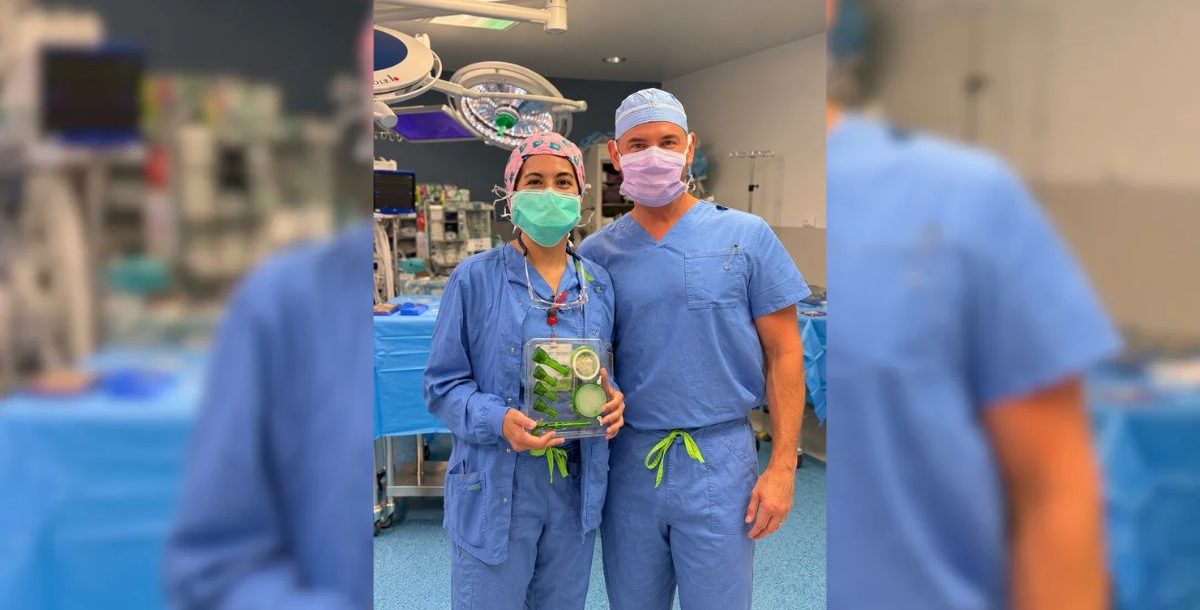
If you need a mastectomy, you may have options beyond traditional breast surgery. For certain patients, there are minimally invasive options that may mean a smaller, less noticeable scar while still accomplishing the goals of breast surgery.
In our Youngstown market, our patients who are considering breast surgery have a new, less invasive option that has the potential to improve outcomes and post-surgical appearance.
If you’ve been diagnosed with breast cancer or are considering risk-reducing breast surgery, make an appointment with your cancer care specialist to learn which surgical options may be appropriate for you.
What is an endoscopic mastectomy?
An endoscopic mastectomy is a minimally invasive breast surgery that uses an endoscopic camera and specialized instruments to remove breast tissue through a small incision.
The technique is often used for endoscopic nipple-sparing mastectomy, or E-NSM. When nipple-sparing surgery is appropriate, the surgeon removes the underlying breast tissue while preserving the skin, nipple and areola.
How does an endoscopic mastectomy work?
The goal is similar to a conventional nipple-sparing mastectomy. The surgeon removes the underlying breast tissue while preserving the breast skin, nipple and areola when it is safe to do so.
The key difference is how the surgeon reaches the breast tissue.
During an endoscopic procedure, a surgeon makes a small incision, often along the side or fold of the breast. An endoscopic camera provides a magnified view while surgical instruments are used to separate and remove the breast tissue. Breast reconstruction may also be performed during the same surgery.
What are the potential benefits of an endoscopic mastectomy?
For eligible patients, potential advantages of an endoscopic nipple-sparing mastectomy include:
- A smaller, less noticeable scar: Incisions may be placed along the side or fold of the breast.
- Preservation of the nipple and breast skin: This can help create a more natural appearance after reconstruction.
- Better visualization for the surgeon: An endoscopic camera provides a magnified view of the surgical area.
- Potential cosmetic benefits: Research comparing endoscopic and conventional nipple-sparing mastectomy has examined favorable cosmetic outcomes associated with the minimally invasive approach.
According to Nicole Reyes, DO, a breast surgeon at the Joanie Abdu Comprehensive Breast Care Center, choosing breast reconstruction during an endoscopic nipple-sparing mastectomy may have additional benefits.
“The biggest benefit is fewer operations for the patient,” Dr. Reyes says. “This can mean a quicker recovery time because they are only recovering from one surgery instead of multiple. But there’s also an emotional aspect of it. With a mastectomy, it can be emotionally traumatizing for a woman to wake up from surgery and be completely flat. With reconstruction, she’ll have some sort of breast mound there when she wakes up.”
Still, minimally invasive doesn’t necessarily mean it’s a better cancer treatment. The most important goal is choosing a procedure that safely and effectively treats your cancer.
How is an endoscopic mastectomy different from a traditional mastectomy?
One of the main differences is the incision.
A traditional mastectomy removes breast tissue through a larger open incision. Depending on the procedure, a surgeon may also remove the nipple, breast skin or nearby lymph nodes.
With an endoscopic nipple-sparing mastectomy, the surgeon accesses the breast through a smaller incision using a camera and endoscopic instruments. Some centers report using an incision of about 3 centimeters for the endoscopic procedure, compared with roughly 5 to 7 centimeters for a conventional nipple-sparing mastectomy, although incision size varies by patient and procedure.
The size of those incisions may require the surgeon performing the reconstruction to alter their technique. However, Adam Cash, MD, a reconstructive and cosmetic plastic surgeon who reconstructs the breast following an endoscopic nipple-sparing mastectomy, says those alterations can have added recovery benefits for the patient.
“Traditionally, the implants are placed under the chest muscle to simulate the breast mound, which can lead to additional pain and discomfort,” Dr. Cash says. “In a lot of cases, these women are candidates to keep it above the muscle, which can amplify the speed of their recovery.”
Mercy Health offers several types of mastectomy, including total, modified radical and nipple-sparing procedures. The right approach depends on your cancer, overall health and individual treatment needs.
Who is a good candidate for an endoscopic mastectomy?
Endoscopic nipple-sparing mastectomy is generally considered for patients who are also candidates for nipple-sparing surgery. This can include certain people with early-stage breast cancer as well as some people considering surgery because they have a high inherited risk of developing breast cancer.
Your surgeon may consider factors such as your:
- Cancer type, stage and location
- Tumor’s proximity to the nipple
- Breast size and shape
- Overall health
- Reconstruction plans
- Personal breast cancer risk
Patients with very large breasts, significant breast sagging or a tumor close to the nipple may not be candidates for this procedure.
What are the risks?
Endoscopic mastectomy is still major surgery and shares many risks associated with conventional mastectomy.
Some potential complications include bleeding, infection, fluid buildup, changes in sensation, delayed healing and problems with blood supply to the nipple or skin. Breast reconstruction may have additional risks.
While the technique is relatively new in the United States, recent studies have reported favorable short-term surgical outcomes in appropriately selected patients.
Is endoscopic surgery the same as robotic surgery?
No. While both are minimally invasive approaches, they use different technology.
With an endoscopic mastectomy, the surgeon directly operates the surgical instruments. With a robotic mastectomy, the surgeon controls instruments using a robotic surgical system. Medical literature treats endoscopic and robotic breast surgery as distinct approaches.
If you’re considering either procedure, talk with your breast surgeon about the evidence behind it, their experience performing the procedure and whether another surgical approach may be more appropriate for you.
How we can help
Breast surgery isn’t one-size-fits-all. Depending on your diagnosis, surgery may include a lumpectomy or one of several types of mastectomy. Other treatments for breast cancer, including radiation therapy, chemotherapy, hormone therapy and breast reconstruction, may also be part of your care plan.
Mercy Health offers comprehensive breast cancer care to help patients find an approach based on their individual needs. Make an appointment with your cancer care specialist to discuss which options may be right for you.
Learn more about the cancer care and oncology services we offer at Mercy Health.