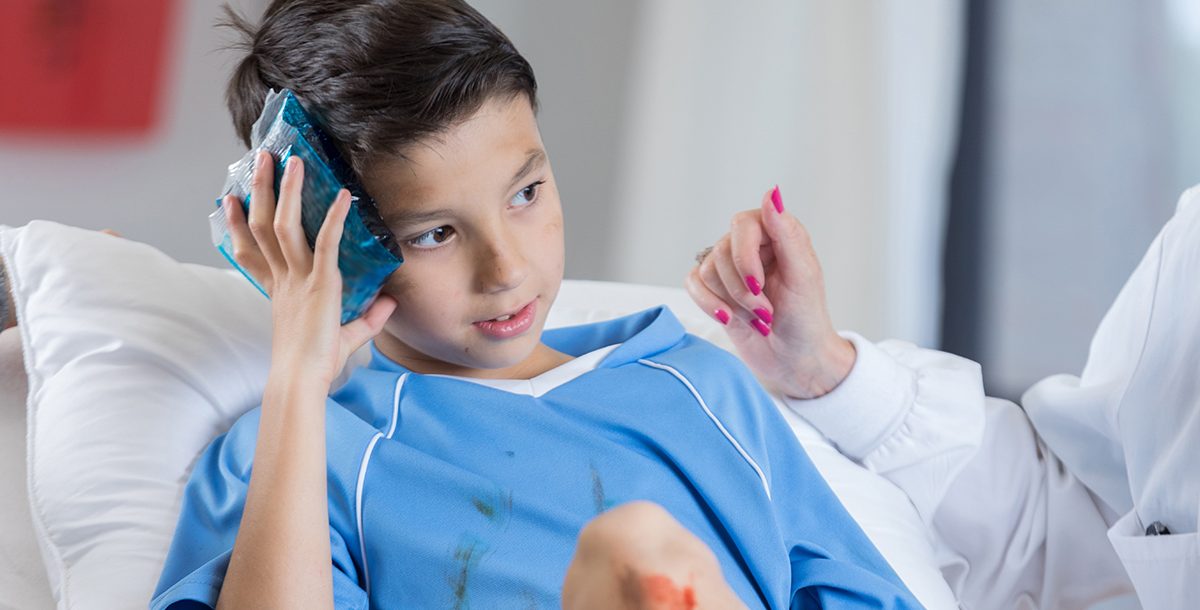
While concussions are common in sports, they can also happen during falls, playground accidents, bike rides or other everyday activities. Recognizing the signs of a concussion in kids early is one of the most important steps in protecting their long-term brain health.
If you think your child may have a concussion but is not showing signs that require emergency care, make an appointment with their family medicine provider or pediatrician as soon as possible. Early diagnosis and treatment can help support a safe recovery and reduce the risk of complications.
What is a concussion?
A concussion is a mild traumatic brain injury (TBI) that can affect how a child’s brain functions. If your child took a blow to the head or a sudden jolt, it’s important to observe them for any symptoms.
Symptoms of a concussion can range from mild to serious. They can be physical, emotional, cognitive or any combination of the three. The symptoms your child exhibits may determine what level of care they require.
Why it’s important to recognize the signs of a concussion in kids
More than 1.6 million sports-related concussions occur in the United States each year. However, many concussions go undetected because children do not always lose consciousness after a head injury.
Prompt recognition of concussion symptoms can make a significant difference in recovery. When parents, teachers, coaches and athletic trainers understand the warning signs, they can help children get the care they need and avoid returning to activities too soon.
Common signs of a concussion in kids
The signs of a concussion in kids can vary from child to child. Symptoms may appear immediately after an injury or develop over the following hours or days.
Physical signs and symptoms
Watch for:
- Headache
- Dizziness
- Balance problems
- Loss of consciousness
- Slurred speech
- Nausea or vomiting
- Fatigue or low energy
- Sensitivity to light
- Blurred vision
Cognitive signs and symptoms
A concussion can affect how your child thinks and processes information. Common symptoms include:
- Confusion
- Slowed thinking
- Mental fog
- Difficulty concentrating
- Memory problems
- Trouble solving problems
Emotional and behavioral signs
Children with a concussion may experience changes in mood or behavior, including:
- Increased irritability
- Anxiety
- Emotional reactions that seem out of character
- Mood swings
- Personality changes
These symptoms can sometimes be subtle, which is why it’s important to monitor your child closely after any head injury.
What to do if your child shows signs of a concussion
If your child is experiencing signs of a concussion, stop all sports and physical activities immediately.
Continuing to play after a concussion can increase the risk of a more serious injury and may significantly lengthen recovery time. A second head injury before the brain has healed can lead to severe complications and, in rare cases, can be life-threatening.
In addition to sitting out of sports, parents should:
- Monitor symptoms closely
- Contact their child’s pediatrician or family medicine provider for an evaluation
- Follow medical guidance regarding school, screen time and physical activity
- Avoid returning to sports until cleared by a qualified provider
Early evaluation is one of the most important factors in supporting a full recovery. A sports medicine provider or concussion specialist can assess symptoms and guide your child’s return to school, sports and other activities.
How concussions are diagnosed
Your child’s provider will use several tools to evaluate and manage concussions in children.
Symptom assessment
A provider will review the child’s symptoms and ask questions about the injury and how symptoms have changed over time.
Cognitive testing
Testing may evaluate:
- Memory
- Concentration
- Recall
- Processing speed
Neurological evaluation
Providers assess balance, coordination and other functions controlled by the brain.
Advanced testing
Depending on the injury, a provider may recommend imaging such as an MRI or CT scan to rule out other conditions.
Neuropsychological testing can also play an important role, especially for young athletes. Baseline concussion testing, including ImPACT® testing, is often recommended for athletes ages 10 and older who participate in contact sports.
After a concussion, results can be compared to baseline scores to help evaluate recovery and guide return-to-play decisions.
When to seek medical care
Take your child to the emergency department if they have symptoms that worsen, including:
- Persistent or severe headaches
- Repeated vomiting
- Increasing confusion
- Difficulty waking up
- Significant balance problems
- Changes in behavior that seem severe or concerning
Even when symptoms appear mild, it is still important to have a child evaluated if a concussion is suspected.
How we can help
Recognizing the signs of a concussion can help protect your child’s health today and in the future. Whether a concussion occurs during sports, at school or during everyday activities, early evaluation is critical to recovery.
Mercy Health offers comprehensive concussion assessment, treatment and management through its sports medicine and concussion care specialists. If your child has experienced a head injury or is showing signs of a concussion, make an appointment with their pediatrician or family medicine provider to start their treatment and receive a personalized recovery plan.
Learn about the orthopedics and sports medicine services as well as the neurology services we offer at Mercy Health.